

Accounting firms have spent decades developing talent through experience. Junior professionals perform foundational work, learn from mistakes, and gradually develop the judgment required to handle more complex assignments.
AI is beginning to change that process.
As routine accounting and audit work becomes easier to automate, firms have an opportunity to improve efficiency and give professionals more time for higher-value work. But the shift also raises an important point: If technology takes on the work that traditionally trained junior accountants, firms need to rethink how they develop the judgment and experience their future leaders will need.
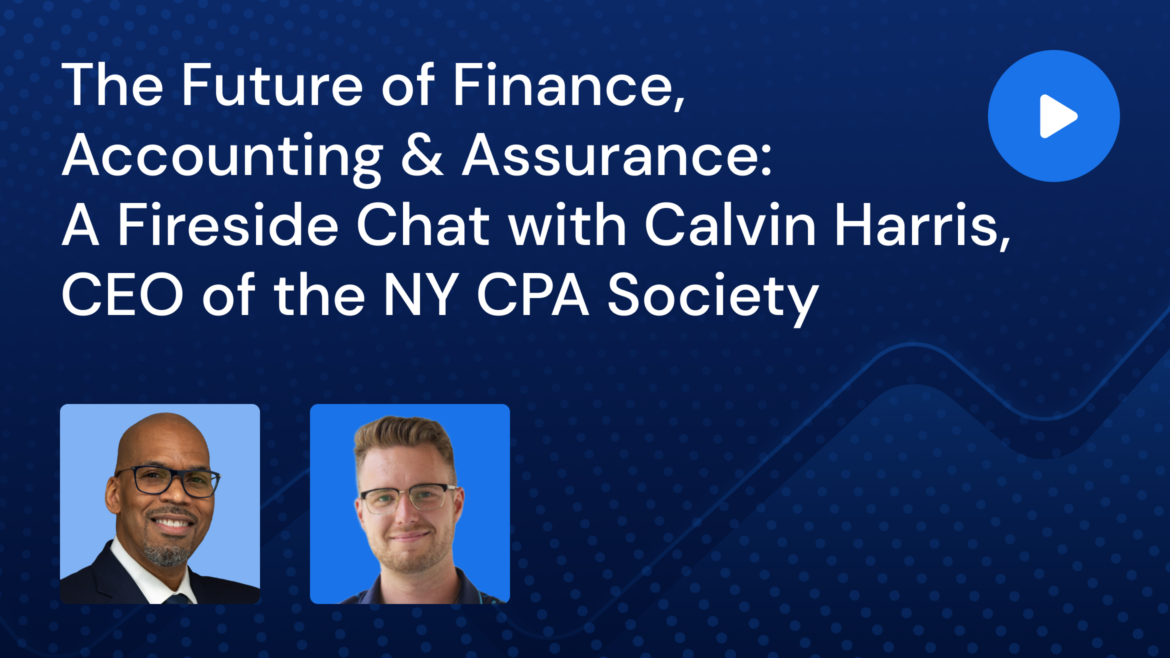
This challenge was central to a conversation between Calvin Harris, CEO of the New York State Society of CPAs (NYCPA), and TJ Smith, Director of Partnerships and Strategy at MindBridge, during Vision 2026.
Their discussion revealed why the future of accounting depends as much on how firms develop their people as on the technology they adopt.
The apprenticeship model is facing a new challenge
Accounting has long operated through a form of apprenticeship.
Junior professionals build experience by preparing work, reviewing documentation, performing procedures, and receiving feedback from more experienced colleagues. Over time, that repetition develops technical knowledge and the ability to recognize when something requires closer examination.
Harris experienced this progression firsthand at Arthur Andersen, where he began his career working with paper audit documentation, calculators, and manual review procedures.
He recalled learning the precise wording of an audit report because he repeatedly checked it alongside colleagues. Technology has since made that particular exercise unnecessary, but the experience illustrates how foundational work contributed to professional development.
AI is accelerating the disappearance of similar tasks.
For firms, removing repetitive work creates obvious efficiencies. Yet those same activities have historically given junior accountants opportunities to learn how financial processes operate, understand common errors, and develop confidence in their decisions.
That experience still needs to come from somewhere.
A firm that automates substantial portions of entry-level work must consider how its professionals will acquire the knowledge and judgment expected of senior accountants, managers, and partners.
Professional judgment becomes more valuable when AI does more of the work
One of Harris’s most compelling observations came from his experience teaching accounting students at Marist University.
He encouraged students to develop the ability to recognize when an answer is wrong.
That advice reflects an important change in how accountants will work with AI.
Technology can produce an analysis, summarize information, or identify an unusual transaction. The professional reviewing that work still needs to determine whether the output is accurate, supported by evidence, and appropriate for the circumstances.
That requires technical knowledge and professional skepticism.
In a Vision 2026 audience poll, 44% of respondents identified technology fluency as their team’s biggest skills gap, while 30% selected critical thinking and professional skepticism.
The results reflect two capabilities firms need to develop together.
Professionals must become comfortable working with AI while maintaining the expertise to question its outputs. Knowing how to operate a platform offers limited value when someone cannot recognize an incorrect conclusion.
Harris also emphasized that technical knowledge remains essential even as communication, judgment, and client relationships become greater differentiators.
An auditor who identifies an unusual transaction still needs to investigate it, ask the right questions, evaluate the evidence, and explain the conclusion.
Those responsibilities require experience. Firms need to create opportunities for professionals to develop it, even as technology changes the work that comes before it.
How should accounting firms rethink training for the AI era?
The challenge is practical. Firms need to preserve the learning that historically came from routine work while taking advantage of automation.
The conversation points to four practical steps firms can take to rethink professional development as AI changes accounting workflows.
1. Teach professionals to challenge AI-generated work
AI-generated outputs can become useful training material.
Instead of focusing exclusively on preparing an analysis, junior accountants can practice evaluating one. They can examine the supporting evidence, identify potential errors, and explain why a conclusion is reasonable or requires further investigation.
This approach gives professionals opportunities to develop skepticism and technical judgment while becoming familiar with AI.
The emphasis should remain on understanding the work. A correct answer matters, but so does the ability to explain why it is correct.
2. Create earlier opportunities for client interaction
Harris identified communication as one of the most important skills accounting professionals need to develop.
As technology reduces time spent on routine preparation, firms can give junior professionals more structured exposure to client conversations, risk discussions, and the communication of findings.
That experience should develop gradually, with appropriate supervision and feedback.
Professionals who can explain complex financial issues clearly and ask effective questions will be better prepared for the advisory and leadership responsibilities firms expect them to assume.
3. Make experienced accountants part of AI training
Harris challenged the assumption that younger professionals naturally have an advantage with emerging technology.
Experienced accountants bring technical expertise, industry knowledge, and years of professional judgment. When combined with curiosity and a willingness to experiment, that experience can be particularly valuable.
Firms can use cross-generational learning to bring these capabilities together.
Experienced professionals can help younger colleagues understand the context behind financial decisions and recognize when an output deserves scrutiny. Younger professionals can contribute familiarity with new workflows and approaches.
Both groups need opportunities to learn.
4. Measure more than time saved
Productivity is easy to quantify. The harder question is whether professionals are becoming better at evaluating evidence, communicating conclusions, and taking on more complex work.
As firms redesign workflows, development milestones should change with them. A faster process creates immediate value. A stronger professional creates value for years.
Harris repeatedly cautioned against treating efficiency as the destination. When technology reduces hours of routine work, firms have an opportunity to decide how that capacity can create greater value.
Some of that time could go toward deeper client relationships, more complex assignments, or better professional development. The important decision is how to use the capacity intentionally.
AI strategy and talent strategy can no longer be separate
Decisions about automation will shape the next generation of accounting firm leaders.
Harris raised a concern about reducing entry-level opportunities in pursuit of short-term efficiency. Firms will still need experienced professionals capable of managing engagements, exercising judgment, and maintaining client relationships. If fewer people enter the profession or gain meaningful early-career experience, developing that future leadership becomes more difficult.
That makes talent development a strategic consideration in every significant decision about AI adoption.
This is why firms should plan technology investments and workforce development together.
Before expanding automation, firm leaders should consider which skills employees currently develop through the affected workflows, how those skills will be taught afterward, and what responsibilities professionals will take on as their work changes.
That planning also gives employees a clearer understanding of their future.
Harris emphasized the importance of communicating openly about organizational direction, even when leadership has not resolved every question. For employees facing changes to their roles, understanding the firm’s intentions can make the transition easier to evaluate and prepare for.
Ultimately, firms have an opportunity to redesign professional development around the work accountants will increasingly be expected to perform.
The firms that take that opportunity seriously can improve efficiency while continuing to build the expertise their clients depend on.
Watch the full conversation from MindBridge Vision 2026
The future of accounting talent raises questions that extend beyond training. Firms are also reconsidering their technology strategies, operating models, and expectations for professionals at every career stage.
In The Future of Finance, Accounting & Assurance, Calvin Harris, CEO of NYCPA, and MindBridge’s TJ Smith explore these changes through a candid conversation about AI adoption, professional judgment, and preparing people for new ways of working.
Watch the full Vision 2026 conversation on demand for a deeper look at how firms can navigate AI adoption, prepare their people for change, and build a workforce strategy that lasts. →