

How to prepare accounting students for an evolving industry

Abstract imagery of growth, development, evolution, education, and the future.

Preparing for an accounting career is much more complex than you may think.

Once upon a time, our grade school teachers drilled into us that we wouldn’t always have calculators in our hands to help tackle the world’s everyday math problems. Little did they know that our smartphones would be cleverly fitted with a default calculator app, perfectly for the palms of our hands.

In the latest acknowledgement of this phenomenon, it seems that today’s accountants are facing a similar issue – the industry is moving too quickly for educators to catch up, and to prepare their students properly for a shifting accounting career.

Which begs the question, is it time to update the curriculum?

Changes for the 21st century

Technological advancements: Accounting, audit, and beyond

A lot has changed since the last generation of accountants began their careers, and the consensus among them is that they are looking for today’s graduates to be agile, flexible, and adaptable with whatever technologies are thrown their way. 

Whether it be for spreadsheets, tax preparation, research software, communication, and data analytics — today’s professional accountants use technology constantly

A learned profession like accounting requires years of study, licenses, and a mindset that recognizes the need for continuous learning. In an article for CPA Journal, Stephanie M. Bryant, the Executive Vice President and Chief Accreditation Officer at the Association to Advance Collegiate Schools of Business (AACSB) International, writes about the large skills gap she experienced when she began her first professional accounting job: “It was my job to be an expert,” she writes. “The difference between making a grade in a class and working on a real client issue was quite a wake-up call for me.”

“It was my job to be an expert,” she writes. “The difference between making a grade in a class and working on a real client issue was quite a wake-up call for me.”

Years later, she said, the skills gap has persisted, with the theory portions being extensive in the curriculum while major gaps related to the currency and relevance of actual accounting practices persist. In particular, a student’s ability to synthesize and apply information critically — with or without the use of ever-changing technology. “It is essential that students develop technological agility and a growth mindset to be successful in today’s work environment.” 

Bridging the gap: Theory vs reality

When AACSB-accreditation was introduced for business programs, it helped establish a standard of quality that ensured the curriculums met the needs found in professional settings. But still, gaps persisted. 

According to the same CPA Journal article, in 2018, a task force of 19 highly respected accounting educators and accounting practitioners—including leaders from the National Association of State Boards of Accountancy (NASBA), the Institute of Management Accountants (IMA), the AICPA, and public accounting—worked for almost 20 months to develop updated accounting standards that would bridge the gap between academic and workforce expectations for new accounting graduates.

It was determined that, since accounting is a rapidly changing field, schools intend to prepare students for an accounting career it must ensure their content is reflective of the work new graduates will be expected to do by reviewing their courses and curriculum regularly.

A student learns about AI and audit technology remotely while working from a well-lit cafe.

In an article from CFODive, Paul Clancy, Senior visiting lecturer of finance at Cornell University spoke to the changes, addressing that the fundamental qualities to succeed are much the same; strong analytical skills, critical thinking skills, perseverance, integrity and teamwork. He noted that “these skills, many of which are developed at your university or college, can continue to be honed throughout life.”

An accounting career in our virtual world

A new challenge that today and tomorrow’s accountants must face is our virtual reality. No, not video games. Remote accounting and audit work has created new obstacles for today’s financial professionals that the next generation need to prepare for. 

As much as we’re all looking forward to getting “back to normal,” many doubt that fully remote or hybrid financial work is going anywhere.

A professor working on their accounting curriculum remotely from an outdoor cafe.

In light of this, educators must stress the importance of remote work and learning by introducing engaging tools and platforms for their students. We’ve all taken a class from home that we’ve written off as “too easy,” or “not worth our time.” But, given the not-so-distant future of physically-distant accounting, it’s time for students and educators to take things more seriously.

For many accountants, searching for tools that enable and enhance remote work has been crucial. Continuing to thrive outside of the office requires a different mindset, approach, and specific tools. Tools that utilize artificial intelligence, machine learning, and more automation-based technologies are making their way into tech stacks around the world. 

But, just because they can make work more efficient, doesn’t make them simple to learn.

Technological agility and resilience

Moreover, agility has become a crucial skill for new finance teams. New graduates are beginning to recognize the importance for finance professionals to broaden their digital skills to include data analytics, risk management, cybersecurity and business modeling into their repertoire.

With that, the 2018 standards incorporated a theoretical shift to include technological agility as a new focus. Today’s accounting students must be able to adapt to new technologies quickly and continuously. Specifically, a focus on artificial intelligence and data analytics are of particular interest, but are frequently missing from university and college classrooms.

To find out more, we spoke with an active educator in a university accounting classroom.

Ann Vanstraelen, Full Professor of Accounting and Assurance Services and Chair of the Department Accounting Information Management (AIM) at Maastricht University in the Netherlands, had been searching for a way to better incorporate emerging technologies like AI into their curriculum.

She notes the traditional, “old way” of teaching accounting was to teach Excel skills and then assign a project that would reinforce those particular Excel skills. However, to be more effective and prepare students for real world circumstances, Vanstraelen notes, educators must expose students to a problem, ask them how best to address it, and require them to identify the different pathways to a solution. 

This involves determining which current technologies and datasets to use, where the relevant sources are, and how they would integrate and synthesize facts to create a solution. 

According to Vanstraelen, this mindset is paramount to success in the new age of accounting:

“Students hear about AI in the news and media quite extensively and want to learn more about it. By the time they graduate, students need to understand data analytics in a context beyond the textbook.”

Thankfully, Vanstraelen came across the Mindbridge University Program, which allowed her to integrate these topics into her existing curriculum at no extra cost. Plus, the students love it.

“They are positively surprised that they get to use it in such a hands-on fashion in our bachelor auditing and fraud detection course and appreciate that we’re letting them see how it actually works and how it’s used in real accounting practices.”

Like MindBridge, many organizations are beginning to explore the value of preparing the professionals of tomorrow with tools and knowledge today. The accounting world is rapidly evolving. Without the proper technology and knowledge, tomorrow’s accountants and auditors will graduate unprepared. We believe it is our duty to help educators bridge the gap between books and technology, theory and reality, education and an accounting career. 

Read on to learn more about how the MindBridge University Alliance Program is helping students and educators get ahead.

How companies and firms are helping to bridge the gap from school to an accounting career

In 2018, MindBridge launched the University Alliance Program, an initiative designed to introduce the next generation of accountants and auditors to the power of artificial intelligence in augmenting the financial processes.

Since then, the University Alliance Program has been adopted by over 100 universities and colleges around the world. The curriculum offers educational materials with hands-on case studies and training, allowing students to learn and experience the power of artificial intelligence and data analytics in performing a financial analysis using MindBridge. With the material being incorporated into advanced audit, data analytics, accounting information systems, and fraud investigation courses. 

Here’s an example of a classroom case study would look like:


Finding fraud using AI

Background
  • Introduce students to the fictitious story of a construction company whose practices raised some red flags during audit planning
  • A general ledger data set is provided with the case study
Task
  • Upload the provided data set into MindBridge and adjust the risk scoring engine as per instructions
  • Identify potentially fraudulent transactions using a combination of AI-generated insights and professional judgement
Learning outcome
  • Students get insights into the applications of AI for audit
  • Students get introduced to AI-human partnerships

Ryan Teeter, a Clinical Assistant Professor at the University of Pittsburgh has incorporated MindBridge into his graduate courses, and after finding success, wants to bridge the content into his undergraduate classes as well. “Being able to have something that is straightforward and shows the different techniques while also piquing the undergraduates interest toward data analysis, risk scoring, and applied statistics are areas that are very useful,” he said.

Professors from around the world are seeing the value of bringing AI and data analytics into their classrooms. To learn more about them, check out our case studies and customer stories.

For more information on how you can participate in the MindBridge University Alliance Program, or to apply, click here.
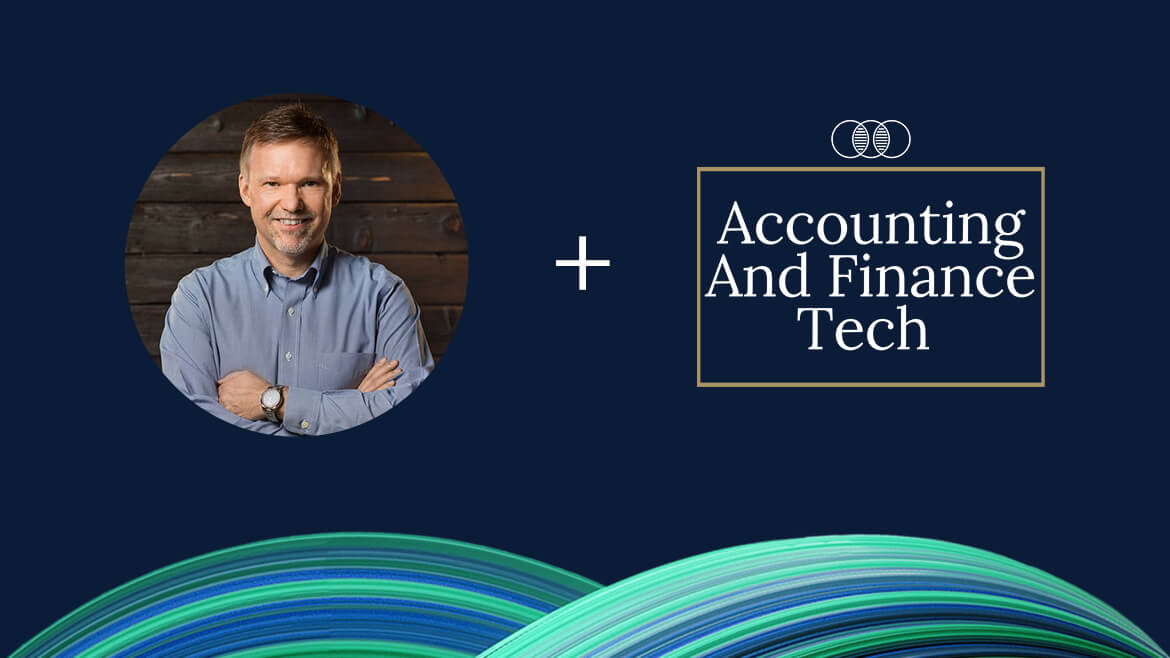
A fireside chat with Russ Jones: Shopify, AI, and the future of the CFO

Russ Jones, former CFO of Shopify, chatting with Clubhouse group, Accounting and Finance Tech.

Unless you’ve been living under a rock for the past several years, you’re well aware that Shopify is one of the biggest IPO success stories in recent history. One of the individuals who was integral in taking Shopify public in May 2015 (and doing so successfully) is Russ Jones, former CFO of the Canadian tech giant from 2011 to 2018. 

Recently, our very own founder hosted a virtual fireside chat with Russ.

Given Russ’s experience, it’s no surprise that he had a wealth of insightful information to share – from his time with Shopify and taking the company public, to how best to present financial information, and what the future holds for CFOs.

Below is an excerpt highlighting some of the key discussion points between Solon and Russ. 

This interview transcript has been edited for clarity and length.

 Solon Angel: Russ, instead of me talking about you, why don’t you introduce yourself and tell us a bit more about yourself?

 Russ Jones: Sure. I’m a CPA, and I’ve been in the industry for 40 years now, so I’ve been around the block a little bit. My most recent full-time role was the CFO at Shopify, which I joined when the company was 50 employees and my team was a part-time accountant and the CEO’s mother-in-law. I took public in 2015, and then I positioned myself as the first official retiree from Shopify. I retired about three years ago, and since then I’ve been doing a number of board and advisory engagements.

Solon: What got you interested in finance in the first place?

 Russ: I really credit it back to an excellent high school teacher who was a CPA and then decided to teach. I had that individual for both accounting and economics courses, and I did quite well in those. I found a lot of interest on the finance side, in numbers and thinking about businesses. The skills that you get opens up a number of doors. Because you have that finance skill set, you get involved in lots of the conversations, so it allows you to understand and add value to a business and partake in a lot of the decisions that get made.

 Solon: When you mentioned Shopify and how early you joined them as CFO, at an early stage like that, did you know one day you would take them public? Did you see that this company could be a unicorn and Canada’s most valuable tech company?

 Russ: Absolutely not. Although I had a number of signals that I used to sort of gauge opportunities. One of the things was that Shopify, as a Canadian company, had tier-one U.S. VC (venture capital). So, to me, that’s always a good indicator. 

The other thing that attracted me was that the thing the company needed to get to the next level was a skill set I brought to the table. I was the grey-haired person in the room helping these young entrepreneurs to keep the company going and scaling. 

The last thing I really liked was the business model; Shopify is a business where you get paid every day. Having been involved in companies that are doing enterprise software where at 11 o’clock on the last night of the quarter you don’t know whether you’re going to do five or 10 million dollars, it’s actually nice to have a company where you know you’re going to get some revenue every day. So, those three things are what attracted me .

 Solon: Looking back, what was the biggest problem that you had dealing with financial operations at Shopify? What was your biggest success?

 Russ: Right from day one that I joined Shopify – and this goes back to your question about did I think they would go public – obviously at that stage, no one knew, but my view is that you always build a company so that it could go public. On the scaling side, the biggest issue is how to introduce finance requirements and controls in a very entrepreneurial-type environment. you really want not to be seen as just a sort of police force of the company and always saying no. And so, about creative ways you can add value and assist in the company’s growth versus becoming an impediment there. 

One of the things we always thought about at Shopify is in the same way that tech companies think about building up technical debt over time, how do you keep reducing managerial debt. A lot of companies, if something goes wrong, they’ll introduce a whole process to make sure it never happens again. I think a better approach is if someone has done something wrong, deal with that. Don’t introduce something that’s going to slow the company down. 

The other point I would like to hammer home is that there is a difference between going public and being public. These days, it can be faster for a company to go public. But if you’re not ready to be public, that’s where a lot of the challenges arise. It’s important to think about both things – am I ready to go public, and am I ready to be public?

Telling the story of the numbers as CFO

Solon: In your time with Shopify, what was your experience with internal and external audits? Were they effective?

 Russ: I think on external audit, to start down that path as soon as you’re ready is a good discipline to have. It also forces some operational best practices within the finance group and the company itself. In terms of the internal audit function, that is one you can start to add a little bit later in terms of the function itself, though the underlying controls you should start to put in place early on because trying to add them later is never the most effective way of doing it.

“As the finance leader, you need to be able to transition into the story of the numbers versus just the numbers themselves”

I think there are a couple of even more important things. As the finance leader, you need to be able to transition into the story of the numbers versus just the numbers themselves. I think that’s the real skill. The other thing to think about is what are the key metrics that I need to talk about to explain the company and how the company is run. But, on the flip-side, you also think about metrics you don’t want to talk about how do you answer questions around that.

An example is that, for Shopify, one of the metrics we didn’t want to talk about was the unit churn number. The reason for that is the role of Shopify as a platform is to allow lots of different merchants to try to start their business. The whole philosophy of making it easy to get up and running and making it very cost-effective was really ingrained into the company. The best way to keep your unit churn number down is not to have people join the platform who aren’t going to be successful, so you make it tougher for them to join. We never did talk about that externally, but every investor we met with would ask us that question. The way that we dealt with this is we had a revenue retention number of over 100%. So that way, we could explain that not every merchant is going to be successful, but the ones staying on the platform generate more revenue as a cohort month over month.

Solon: That is a very important point. I think a lot of people underestimate the power of positioning facts in a meaningful and valuable way for people to understand.

Russ: And as you move up in finance in terms of leadership roles, that ability to summarize and present the information is the real skill that gets developed over time. I see that as a tipping point for some people that, for example, would send the board Excel workbooks with just reams and reams of information, where really at that level you want one or two slides that tell the story and then you can answer questions. 

The current and future role of the CFO

Solon: To what extent is a CFO involved in managing and mitigating risk for a company like Shopify? Does that role change when the organization gets larger?

Russ: I think risk is something that companies have from the very beginning. As bigger, you start, on both the finance and the legal sides, hiring people that spend a larger percentage of their time on just that. But is a cross-company type of thing. The high-level risks that a company deals with aren’t just financial risks or legal risks; they’re operational risks to a large degree. Understanding what those risks are and making sure that the right group is taking care of them is  an important part of any fast-growing company.

“As data and machine learning and artificial intelligence become more important, I think there is a real role for finance to play”

 Solon: When thinking of the finance industry at large and the role of CFOs and finance professionals, what concerns you the most today in what you see in the profession?

 Russ: Yes, there are concerns, but I’m also excited about all of the opportunities out there. I think the one concern I have is with the industry right now and the number of SPACs (special purpose acquisition companies) out there chasing companies. I do worry about companies that aren’t ready to go public starting to go public. But having said that, I do believe the finance role itself is expanding. As data and machine learning and artificial intelligence become more important, I think there is a real role for finance to play. So, overall, I would say I’m quite excited about it.

For more industry and thought provoking articles, visit our blog.