
How to prepare accounting students for an evolving industry

Abstract imagery of growth, development, evolution, education, and the future.

Preparing for an accounting career is much more complex than you may think.

Once upon a time, our grade school teachers drilled into us that we wouldn’t always have calculators in our hands to help tackle the world’s everyday math problems. Little did they know that our smartphones would be cleverly fitted with a default calculator app, perfectly for the palms of our hands.

In the latest acknowledgement of this phenomenon, it seems that today’s accountants are facing a similar issue – the industry is moving too quickly for educators to catch up, and to prepare their students properly for a shifting accounting career.

Which begs the question, is it time to update the curriculum?

Changes for the 21st century

Technological advancements: Accounting, audit, and beyond

A lot has changed since the last generation of accountants began their careers, and the consensus among them is that they are looking for today’s graduates to be agile, flexible, and adaptable with whatever technologies are thrown their way. 

Whether it be for spreadsheets, tax preparation, research software, communication, and data analytics — today’s professional accountants use technology constantly

A learned profession like accounting requires years of study, licenses, and a mindset that recognizes the need for continuous learning. In an article for CPA Journal, Stephanie M. Bryant, the Executive Vice President and Chief Accreditation Officer at the Association to Advance Collegiate Schools of Business (AACSB) International, writes about the large skills gap she experienced when she began her first professional accounting job: “It was my job to be an expert,” she writes. “The difference between making a grade in a class and working on a real client issue was quite a wake-up call for me.”

“It was my job to be an expert,” she writes. “The difference between making a grade in a class and working on a real client issue was quite a wake-up call for me.”

Years later, she said, the skills gap has persisted, with the theory portions being extensive in the curriculum while major gaps related to the currency and relevance of actual accounting practices persist. In particular, a student’s ability to synthesize and apply information critically — with or without the use of ever-changing technology. “It is essential that students develop technological agility and a growth mindset to be successful in today’s work environment.” 

Bridging the gap: Theory vs reality

When AACSB-accreditation was introduced for business programs, it helped establish a standard of quality that ensured the curriculums met the needs found in professional settings. But still, gaps persisted. 

According to the same CPA Journal article, in 2018, a task force of 19 highly respected accounting educators and accounting practitioners—including leaders from the National Association of State Boards of Accountancy (NASBA), the Institute of Management Accountants (IMA), the AICPA, and public accounting—worked for almost 20 months to develop updated accounting standards that would bridge the gap between academic and workforce expectations for new accounting graduates.

It was determined that, since accounting is a rapidly changing field, schools intend to prepare students for an accounting career it must ensure their content is reflective of the work new graduates will be expected to do by reviewing their courses and curriculum regularly.

A student learns about AI and audit technology remotely while working from a well-lit cafe.

In an article from CFODive, Paul Clancy, Senior visiting lecturer of finance at Cornell University spoke to the changes, addressing that the fundamental qualities to succeed are much the same; strong analytical skills, critical thinking skills, perseverance, integrity and teamwork. He noted that “these skills, many of which are developed at your university or college, can continue to be honed throughout life.”

An accounting career in our virtual world

A new challenge that today and tomorrow’s accountants must face is our virtual reality. No, not video games. Remote accounting and audit work has created new obstacles for today’s financial professionals that the next generation need to prepare for. 

As much as we’re all looking forward to getting “back to normal,” many doubt that fully remote or hybrid financial work is going anywhere.

A professor working on their accounting curriculum remotely from an outdoor cafe.

In light of this, educators must stress the importance of remote work and learning by introducing engaging tools and platforms for their students. We’ve all taken a class from home that we’ve written off as “too easy,” or “not worth our time.” But, given the not-so-distant future of physically-distant accounting, it’s time for students and educators to take things more seriously.

For many accountants, searching for tools that enable and enhance remote work has been crucial. Continuing to thrive outside of the office requires a different mindset, approach, and specific tools. Tools that utilize artificial intelligence, machine learning, and more automation-based technologies are making their way into tech stacks around the world. 

But, just because they can make work more efficient, doesn’t make them simple to learn.

Technological agility and resilience

Moreover, agility has become a crucial skill for new finance teams. New graduates are beginning to recognize the importance for finance professionals to broaden their digital skills to include data analytics, risk management, cybersecurity and business modeling into their repertoire.

With that, the 2018 standards incorporated a theoretical shift to include technological agility as a new focus. Today’s accounting students must be able to adapt to new technologies quickly and continuously. Specifically, a focus on artificial intelligence and data analytics are of particular interest, but are frequently missing from university and college classrooms.

To find out more, we spoke with an active educator in a university accounting classroom.

Ann Vanstraelen, Full Professor of Accounting and Assurance Services and Chair of the Department Accounting Information Management (AIM) at Maastricht University in the Netherlands, had been searching for a way to better incorporate emerging technologies like AI into their curriculum.

She notes the traditional, “old way” of teaching accounting was to teach Excel skills and then assign a project that would reinforce those particular Excel skills. However, to be more effective and prepare students for real world circumstances, Vanstraelen notes, educators must expose students to a problem, ask them how best to address it, and require them to identify the different pathways to a solution. 

This involves determining which current technologies and datasets to use, where the relevant sources are, and how they would integrate and synthesize facts to create a solution. 

According to Vanstraelen, this mindset is paramount to success in the new age of accounting:

“Students hear about AI in the news and media quite extensively and want to learn more about it. By the time they graduate, students need to understand data analytics in a context beyond the textbook.”

Thankfully, Vanstraelen came across the Mindbridge University Program, which allowed her to integrate these topics into her existing curriculum at no extra cost. Plus, the students love it.

“They are positively surprised that they get to use it in such a hands-on fashion in our bachelor auditing and fraud detection course and appreciate that we’re letting them see how it actually works and how it’s used in real accounting practices.”

Like MindBridge, many organizations are beginning to explore the value of preparing the professionals of tomorrow with tools and knowledge today. The accounting world is rapidly evolving. Without the proper technology and knowledge, tomorrow’s accountants and auditors will graduate unprepared. We believe it is our duty to help educators bridge the gap between books and technology, theory and reality, education and an accounting career. 

Read on to learn more about how the MindBridge University Alliance Program is helping students and educators get ahead.

How companies and firms are helping to bridge the gap from school to an accounting career

In 2018, MindBridge launched the University Alliance Program, an initiative designed to introduce the next generation of accountants and auditors to the power of artificial intelligence in augmenting the financial processes.

Since then, the University Alliance Program has been adopted by over 100 universities and colleges around the world. The curriculum offers educational materials with hands-on case studies and training, allowing students to learn and experience the power of artificial intelligence and data analytics in performing a financial analysis using MindBridge. With the material being incorporated into advanced audit, data analytics, accounting information systems, and fraud investigation courses. 

Here’s an example of a classroom case study would look like:


Finding fraud using AI

Background
  • Introduce students to the fictitious story of a construction company whose practices raised some red flags during audit planning
  • A general ledger data set is provided with the case study
Task
  • Upload the provided data set into MindBridge and adjust the risk scoring engine as per instructions
  • Identify potentially fraudulent transactions using a combination of AI-generated insights and professional judgement
Learning outcome
  • Students get insights into the applications of AI for audit
  • Students get introduced to AI-human partnerships

Ryan Teeter, a Clinical Assistant Professor at the University of Pittsburgh has incorporated MindBridge into his graduate courses, and after finding success, wants to bridge the content into his undergraduate classes as well. “Being able to have something that is straightforward and shows the different techniques while also piquing the undergraduates interest toward data analysis, risk scoring, and applied statistics are areas that are very useful,” he said.

Professors from around the world are seeing the value of bringing AI and data analytics into their classrooms. To learn more about them, check out our case studies and customer stories.

For more information on how you can participate in the MindBridge University Alliance Program, or to apply, click here.

A fireside chat with Russ Jones: Shopify, AI, and the future of the CFO

Russ Jones, former CFO of Shopify, chatting with Clubhouse group, Accounting and Finance Tech.

Unless you’ve been living under a rock for the past several years, you’re well aware that Shopify is one of the biggest IPO success stories in recent history. One of the individuals who was integral in taking Shopify public in May 2015 (and doing so successfully) is Russ Jones, former CFO of the Canadian tech giant from 2011 to 2018. 

Recently, our very own founder hosted a virtual fireside chat with Russ.

Given Russ’s experience, it’s no surprise that he had a wealth of insightful information to share – from his time with Shopify and taking the company public, to how best to present financial information, and what the future holds for CFOs.

Below is an excerpt highlighting some of the key discussion points between Solon and Russ. 

This interview transcript has been edited for clarity and length.

 Solon Angel: Russ, instead of me talking about you, why don’t you introduce yourself and tell us a bit more about yourself?

 Russ Jones: Sure. I’m a CPA, and I’ve been in the industry for 40 years now, so I’ve been around the block a little bit. My most recent full-time role was the CFO at Shopify, which I joined when the company was 50 employees and my team was a part-time accountant and the CEO’s mother-in-law. I took public in 2015, and then I positioned myself as the first official retiree from Shopify. I retired about three years ago, and since then I’ve been doing a number of board and advisory engagements.

Solon: What got you interested in finance in the first place?

 Russ: I really credit it back to an excellent high school teacher who was a CPA and then decided to teach. I had that individual for both accounting and economics courses, and I did quite well in those. I found a lot of interest on the finance side, in numbers and thinking about businesses. The skills that you get opens up a number of doors. Because you have that finance skill set, you get involved in lots of the conversations, so it allows you to understand and add value to a business and partake in a lot of the decisions that get made.

 Solon: When you mentioned Shopify and how early you joined them as CFO, at an early stage like that, did you know one day you would take them public? Did you see that this company could be a unicorn and Canada’s most valuable tech company?

 Russ: Absolutely not. Although I had a number of signals that I used to sort of gauge opportunities. One of the things was that Shopify, as a Canadian company, had tier-one U.S. VC (venture capital). So, to me, that’s always a good indicator. 

The other thing that attracted me was that the thing the company needed to get to the next level was a skill set I brought to the table. I was the grey-haired person in the room helping these young entrepreneurs to keep the company going and scaling. 

The last thing I really liked was the business model; Shopify is a business where you get paid every day. Having been involved in companies that are doing enterprise software where at 11 o’clock on the last night of the quarter you don’t know whether you’re going to do five or 10 million dollars, it’s actually nice to have a company where you know you’re going to get some revenue every day. So, those three things are what attracted me .

 Solon: Looking back, what was the biggest problem that you had dealing with financial operations at Shopify? What was your biggest success?

 Russ: Right from day one that I joined Shopify – and this goes back to your question about did I think they would go public – obviously at that stage, no one knew, but my view is that you always build a company so that it could go public. On the scaling side, the biggest issue is how to introduce finance requirements and controls in a very entrepreneurial-type environment. you really want not to be seen as just a sort of police force of the company and always saying no. And so, about creative ways you can add value and assist in the company’s growth versus becoming an impediment there. 

One of the things we always thought about at Shopify is in the same way that tech companies think about building up technical debt over time, how do you keep reducing managerial debt. A lot of companies, if something goes wrong, they’ll introduce a whole process to make sure it never happens again. I think a better approach is if someone has done something wrong, deal with that. Don’t introduce something that’s going to slow the company down. 

The other point I would like to hammer home is that there is a difference between going public and being public. These days, it can be faster for a company to go public. But if you’re not ready to be public, that’s where a lot of the challenges arise. It’s important to think about both things – am I ready to go public, and am I ready to be public?

Telling the story of the numbers as CFO

Solon: In your time with Shopify, what was your experience with internal and external audits? Were they effective?

 Russ: I think on external audit, to start down that path as soon as you’re ready is a good discipline to have. It also forces some operational best practices within the finance group and the company itself. In terms of the internal audit function, that is one you can start to add a little bit later in terms of the function itself, though the underlying controls you should start to put in place early on because trying to add them later is never the most effective way of doing it.

“As the finance leader, you need to be able to transition into the story of the numbers versus just the numbers themselves”

I think there are a couple of even more important things. As the finance leader, you need to be able to transition into the story of the numbers versus just the numbers themselves. I think that’s the real skill. The other thing to think about is what are the key metrics that I need to talk about to explain the company and how the company is run. But, on the flip-side, you also think about metrics you don’t want to talk about how do you answer questions around that.

An example is that, for Shopify, one of the metrics we didn’t want to talk about was the unit churn number. The reason for that is the role of Shopify as a platform is to allow lots of different merchants to try to start their business. The whole philosophy of making it easy to get up and running and making it very cost-effective was really ingrained into the company. The best way to keep your unit churn number down is not to have people join the platform who aren’t going to be successful, so you make it tougher for them to join. We never did talk about that externally, but every investor we met with would ask us that question. The way that we dealt with this is we had a revenue retention number of over 100%. So that way, we could explain that not every merchant is going to be successful, but the ones staying on the platform generate more revenue as a cohort month over month.

Solon: That is a very important point. I think a lot of people underestimate the power of positioning facts in a meaningful and valuable way for people to understand.

Russ: And as you move up in finance in terms of leadership roles, that ability to summarize and present the information is the real skill that gets developed over time. I see that as a tipping point for some people that, for example, would send the board Excel workbooks with just reams and reams of information, where really at that level you want one or two slides that tell the story and then you can answer questions. 

The current and future role of the CFO

Solon: To what extent is a CFO involved in managing and mitigating risk for a company like Shopify? Does that role change when the organization gets larger?

Russ: I think risk is something that companies have from the very beginning. As bigger, you start, on both the finance and the legal sides, hiring people that spend a larger percentage of their time on just that. But is a cross-company type of thing. The high-level risks that a company deals with aren’t just financial risks or legal risks; they’re operational risks to a large degree. Understanding what those risks are and making sure that the right group is taking care of them is  an important part of any fast-growing company.

“As data and machine learning and artificial intelligence become more important, I think there is a real role for finance to play”

 Solon: When thinking of the finance industry at large and the role of CFOs and finance professionals, what concerns you the most today in what you see in the profession?

 Russ: Yes, there are concerns, but I’m also excited about all of the opportunities out there. I think the one concern I have is with the industry right now and the number of SPACs (special purpose acquisition companies) out there chasing companies. I do worry about companies that aren’t ready to go public starting to go public. But having said that, I do believe the finance role itself is expanding. As data and machine learning and artificial intelligence become more important, I think there is a real role for finance to play. So, overall, I would say I’m quite excited about it.

For more industry and thought provoking articles, visit our blog.

Change management: What is it, and why is it important?

Change is scary. But with a little risk, a lot of planning, and some extra effort comes an opportunity for growth and reward. That’s what makes change management so important.

As a manager, department head, or executive how do you know when it’s time for change? How do you invoke change within an organization, and how do you get others on board?

Studies in what’s known as change management have shown that there is no one single answer to what most influences and leads to successful transformation initiatives.

In recent years, change management strategies have focused on soft factors like culture, leadership, and motivation. Each of these play a key role in a successful transition. But, for change to truly take hold, it’s also important to focus on the hard factors like duration, integrity, commitment, and effort.

In this article, we’ll discuss the definition of change management, address corporate responsibility during the process, what you and your team need to do to be successful, and show you the best ways to implement transition skills  and best practices into your organization and projects.

What is change management?

Change management is a big, daunting term, let alone task. It’s a rather condensed way of explaining the process when an organization takes on projects or initiatives to improve performance, address key issues, and seize new opportunities. These endeavors may require companies to shift their methodologies, roles, organizational structures, and perhaps even the types of and uses for technology.

Successful transitions dependent upon four core principles. These principles are important to understand before undertaking a large shift in processes or anything else, no matter what the context:

  1. Understanding change – Understand the questions that need to be asked, the why, and the “ins and outs” of the change.
  2. Planning change – This looks different for every organization, but can include achieving high-level sponsorship, identifying stakeholder involvement, and motivational techniques and establishing a team responsible for managing the change.
  3. Implementing change – Roll out the change, ensure everyone has been trained on the new process, technology, etc, knows what their role is and the importance they play in affecting change.
  4. Communicating change – Tools to help everyone understand why the change is happening, the positive effects that will come and the steps to required to ensure success.

Now, that’s just a brief overview. Here’s an in-depth review of these four principles, and how each of them help you work toward successfully-managed change in your organization.

Understanding change management, implementing best practices

Understanding change management begins by understanding its three important levels

According to Prosci, a change management solution, the three levels are: 

  • Individual 
  • Organizational 
  • Enterprise 

In this model, enterprise change management is therefore dependent on both successful individual change management and organizational change management. Each of these aspects build onto one another to enact lasting, ingrained change across your department, team, or organization.

Individual change management – This will require tapping into the mind of your employees. It requires understanding how people experience change and what they need to handle it successfully, and thrive post-implementation. 

ADKAR is a great acronym created by Prosci founder Jeff Hiatt that represents the five tangible and concrete outcomes required for individual staff. 

The acronym stands for:

A – Awareness of the need for change
D – Desire to support the change
K – Knowledge of how to change
A – Ability to demonstrate skill and behaviors
R – Reinforcement to make the change stick

A – Awareness of the need for change
D – Desire to support the change
K – Knowledge of how to change
A – Ability to demonstrate skill and behaviors
R – Reinforcement to make the change stick

For success at the individual level of change management, companies need to be able to communicate these five ADKAR elements to their employees in order for them to understand why the necessity of the change, where the change is coming from, how they can support the change, and how they will be impacted from it and the benefits the change represents.

Organizational change management – These are the steps and actions taken at a project level to support the individuals impacted by the ongoing change process. It starts by identifying the groups or people who will need to change, and in what ways. Once identified, successful organizational change management requires a customized plan for each individual to ensure that they receive the awareness, leadership, and training they need to be successful going forward.

Individual employees are at the center of successful change management processes; their success or failure will determine the success or failure of the processes that are changing organizationally. 

Enterprise change management – This is the ‘final’ level of change management and essentially means that effective change management is embedded into your organization’s roles, structures, processes and leadership competencies. When it comes to enterprise change management, newly-implemented processes are consistently applied to initiatives, leaders will have the skills to guide their teams through the change, and staff will know what to ask for to be successful.

When embedded into your structure, enterprise change management capability means that individuals embrace change more effectively, and the organization itself is able to respond faster to market changes, embrace strategic initiatives, and adopt new technology much more rapidly. 

Now that we’ve established the benefits and principles of managing change, how does it work, exactly?

Learn more about how MindBridge can help you sample less, and discover more.

A – Awareness of the need for change
D – Desire to support the change
K – Knowledge of how to change
A – Ability to demonstrate skill and behaviors
R – Reinforcement to make the change stick

How does change management work?

Change management relies on cohesive effort between management and employees to lead a successful transition. If leadership is not able to create a solid plan, and if employees are unable to “embrace and learn a new way of working, the initiative will fail.”

Take transitioning financial technologies and processes, for example. As technology improves and data sets increase, financial professionals and their departments are feeling the pressure to do more in less time. The trouble comes when the quality of work suffers as a result of the attempt to marry efficiency with quality. This is especially true of risk management and discovery. 

Platforms like MindBridge help organizations discover the known and unknown risk in their financial data sets. They can analyze 100% of transactions, provide insights to better communicate analysis with stakeholders, and ultimately produce higher quality work in a fraction of the time.

But, all of this requires a solid, well-executed change management plan. While new technologies are increasingly turnkey, unlocking their full potential takes buy-in at all levels of an organization, and investment in the principles of change. 

At MindBridge, we strive to enable our customers with the tools, resources, and support they need to successfully transition their financial processes. But, for the organizations themselves, there is still work to do. 

When it comes to changing any process or technology, the status quo is always simpler. But, those who are truly committed to growth and the future of their organizations aren’t content with the easy way out.

By integrating proper change management in the deployment process, companies and departments will be able to get employees on board and involved in the process to ensure as smooth a transition as possible. There will be headaches, and you may be uncomfortable. But that’s how change management works. If it were easy, everyone would be successful.

How to plan for transition

To help plan for the transition process, Harvard Business Review discusses the hard factors that need to be discussed more (along with soft factors like culture, leadership and motivation) when implementing change management strategies. These factors allow companies to measure, communicate and influence elements quickly to affect transformation. Before they start, companies need to understand the time allotted to complete the change, the number of people required to execute it, and the financial results that intended actions are expected to achieve. 

To help lead a successful change management operation, there are four specific factors companies can use to determine the outcome and create a path to success:

Duration – The length of time it will take until the change program is complete, and the length of time between reviews built to measure success

Integrity – The ability to select the best staff to lead the program. Look for problem solving skills, results & methodological oriented individuals

Commitment – The level of enthusiasm and resilence  from both management and employees to affect this change

Effort – Calculate the amount of time and effort beyond existing responsibilities, resources that are over stretched may compromise the change program or normal operations.

For future transitions

Change management requires focus, organization, and motivation. Not everyone will be willing to accept and help to invoke this change at the same time. The source of resistance is often individuals or groups, but it can also be systems or processes that are outdated or that fail to fit current business conditions.

Ways to mitigate these obstacles include rewarding flexibility, creating role models for change and repeating the key messages and goals of the project throughout the entire change program.

This is where the message of the “bigger picture” becomes crucial, if employees feel separated from the goals they will question their motivations. But by showing the concrete benefits of change for them, their department, and the organization more largely, you can demonstrate how all this added effort will lead to gains in the future.

For more on creating an effective transition strategy, watch our webinar, Change management 101: Strategies for leading change when adopting AI.

For more articles and resources like this one, visit our blog.

Ready to embrace AI to strengthen your remote audit?

Contact our team to schedule a demo of the MindBridge risk discovery platform.

Financial automation: The good, the bad, and the future

Financial automation: The good, the bad, and the future | MindBridge

Well, it’s finally here. According to an article from Forbes Magazine, we have reached the age of automation. From AI and machine learning to financial automation and robotics, we’re officially an automatic civilization. Please, be kind to our new robot co-workers.

Okay seriously, this is important stuff, even if we did all see it coming. Especially when it comes to the ever-expanding world of finance.

In every industry, every business, and every firm, finances and how they are managed are vital to the growth and development of a company. Whether you’re a business owner, CFO, or part of the finance department, the role of automation in the future of finance is vital to your role, growth, and the evolution of your organization.

Financial automation doesn’t just mean automating payroll, although it doesn’t hurt to do that as well. Automating financial processes incorporates much more, including risk assessment, audit, and compliance among many other aspects.

An article from DigitalistMag outlines the capabilities of today’s financial automation services, describing the ability to “gain new insights from existing data to optimize credit decisions and improve financial risk management, automating business processes that previously required manual human intervention, and improving the customer experience.”

Financial management has evolved rapidly since the advent of computational technology. As this technology evolved, financial experts and professionals soon recognized that process standardization and centralization are absolutely necessary to increase the efficiency and effectiveness of modern organizations. As efficiency grew into a central tenant of management processes, financial automation became the next logical step for businesses and organizations.

In 2016, McKinsey estimated that 60% of all occupations have approximately 30% or more capabilities that can be automated with existing technology. Moreover, there has been a significant change in the understanding of what can be automated and what should be automated, which has become increasingly evident due to the unprecedented effect the COVID-19 pandemic has had on work

For businesses looking to hire and outsource their financial processes or professionals who want to simplify and streamline internal processes, it may be time to look at automating them instead. For many, this has already begun, as “CFOs around the world heavily invest in financial automation software as a next step in the evolution to enable enterprise transformation.” 

In this way, financial automation could lead to a complex or fundamental shift in how an organization’s core business is conducted.

Taking the first step toward financial automation can seem daunting. However, with more businesses adopting automation into their day-to-day financial practices, it’s clear to see the power this technology holds.

So, what exactly is financial automation?

What is financial automation?

For us mere mortals, financial automation can be as simple as automatically depositing your paycheck, paying bills, or saving a portion of your income per month. The concept is similar for businesses and corporations, but at a much larger scale, and with a lot more moving parts.

Financial automation is the process of utilizing technology options to complete tasks with minimal human intervention. These tasks would normally be accomplished by employees, which, in theory, frees up time for them to perform more complex tasks. 

According to another automation study from the McKinsey Global Institute’s automation research, current in-use technologies can fully automate 42 percent of finance activities and mostly automate a further 19 percent.

While many still consider financial automation and intelligent software to be on the horizon, organizations have already started to utilize cutting-edge tools and technologies such as advanced analytics, process automation, robo-advisors, and self-learning programs. A lot more is still yet to come as technologies evolve, become more widely available, and are put to innovative uses.

Levels of automation

The initial forms of automation were (and still are) macros and scripts: simple rules-based automation that repeated simple work with highly structured data –  things like general accounting operations, revenue management, and cash disbursement have an over 75% fully automatable ability with already existing technologies.

Robotic process automation (RPA)

RPA is the basis (above macros and scripts) to understand the capabilities of automation. An example of an RPA would be simple software that can perform repetitive tasks quickly with minimal effort, like some of the rote tasks mentioned earlier. 

According to the 2017 McKinsey research (also mentioned earlier), about a third of the opportunity in finance can be captured using basic task-automation technologies such as these.

Artificial intelligence (AI) and intelligent automation (IA)

On the other end of the spectrum is artificial intelligence. Artificial intelligence is theoretically achieved when software is able to make intelligent decisions while still complying with controls using algorithms or machine learning

Machine learning algorithms demonstrate the ability for computers to take in a constant stream of data, analyze that data for patterns and recommend solutions to problems humans can’t even see, proving vastly positive results in improving a company’s financial proficiency.

Once a dream for financial professionals and business owners, this form of financial automation software is becoming a reality, shaking up the way that tasks are performed, and even introducing other aspects such as forecasting into the mix.

Improvements with financial process automation 

The umbrella of finance – from payroll to predictive forecasts can involve menial and repetitive tasks which leave limited time and resources to focus on value-adding activities to grow your organization. When financial process automation is added, it serves as a pivotal support to free up needed resources and time. 

As these technologies can cover more ground and more deeply analyze company financials, many organizations are finding that AI and automation technologies are actively improving their bottom line. According to a survey from the Association of Certified Fraud Examiners via the Harvard Business Review, “organizations lose 5% of their revenue every year due to fraud. The typical fraud case causes a loss of $8,300 per month and lasts a full 14 months before detection. And lack of internal controls contributed to nearly one-third of all fraud cases.”

Risk discovery is just one aspect of financial automation, but a growing one.

As AI, RPA and IA continue to use machine learning to do more and perform more intricate tasks, offering insight into finances, we are seeing how this can be incorporated into an organization’s long-term organizational strategy. MindBridge, for example, has developed AI technology for risk discovery, a complex financial task that incorporates not only transactional analysis, but offers broader insights into financial health and integrity.

Want to learn more about how auditors are using AI?

By automating certain financial processes, “finance professionals can not only provide real-time insights into the current status of the business but, with advanced predictive algorithms, they can look into the future and proactively steer the business.”

Financial automation and its capabilities are excelling at a fast rate. With the help of AI, RPA, and IA, standard automation practices can be enriched beyond simple pre-programmed controls and scripts. From McKinsey & Company once again, AI algorithms can learn from historical datasets and the interactions of the financial professional with the system, thereby improving the matching rates tremendously. In this context, matching rates refer to the ability at which an AI system is able to tag users to certain data sets based on their profile of demonstrated usage. Furthermore, the AI technology allows automatic extraction of unstructured information from documents, such as emails.

Of course, return on investment is always a concern. It can take a lot of time and effort to implement new technologies, and savvy business leaders need to know that the tools and processes they put their money behind will work. 

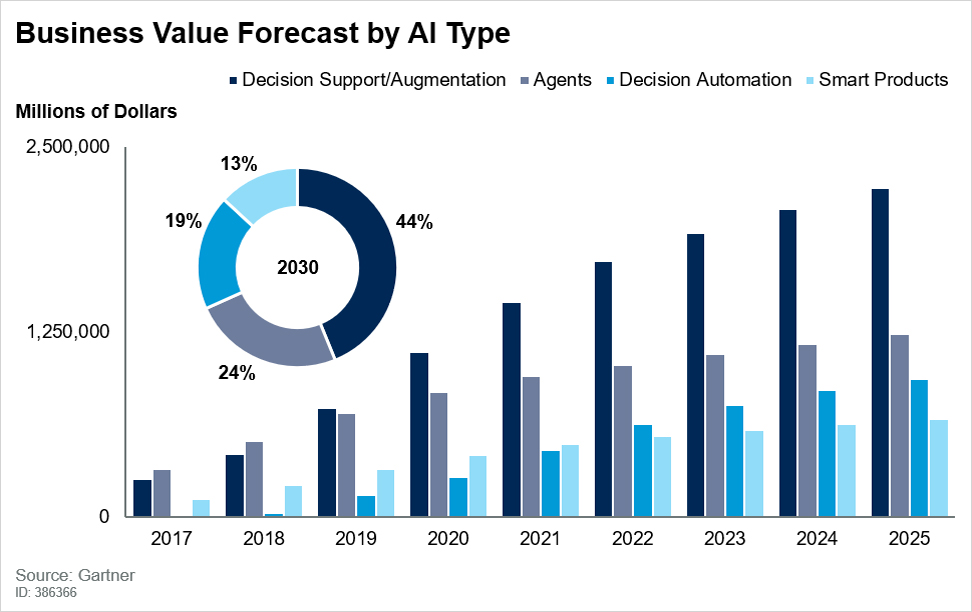
According to Gartner, “AI augmentation will create $2.9 trillion of business value and 6.2 billion hours of worker productivity globally.” Basically, they define this term as the combined work of humans and technology, with the people at the center of the operation.

business value forecast by AI type | Graph
Source: Gartner.

If these forecasts are correct, executives should be clamouring for AI and automation investment. Even a small piece of this pie can level up your office, department, or organization writ large.

What financial process automation could mean for work structure

One of the biggest concerns associated with exploring financial automation and therefore implementing financial automation software is what happens to the employees and the roles formerly associated with those finance objectives. 

There’s no doubt that introducing financial automation will change the roles of many employees and even the manner to which employees are trained or progress toward career objectives. One thing is for sure though, automation will replace low-value, simple, and time-consuming tasks, thereby giving staff the flexibility to expand their roles, and spend more time on value-adding activities to help drive a company’s competitive advantage. 

In an article from PWC on change management, they outline five steps that can help firms adopting financial automation make the transition as smooth as possible:

  • Prepare for human capital risks like you’d prepare for any other risks
  • Help people find their way
  • Create organizational support for success
  • Expect changes to jobs, compensations, and structure
  • Learn new ways to develop your team

To unlock financial automation’s full potential, managers must be willing to re-engineer processes, and redeploy resources to optimize efficiency and output.

Another consideration for anyone looking to adopt automation and AI technology is assurance and verification. This verification work ensures that the technology in place is doing what it’s supposed to do, at the level of work required to meet compliance requirements and quality assurance standards.

Internal teams can “test” automations by utilizing what are known as “Test Frameworks” for applications. Some examples of framework tools come from SmartBear and Selenium. However, it’s a lot of work, and unless you have dedicated developers that can help your team test automation tools, you’re sort of stuck. For many businesses, it’s much easier to work with platforms and tools that have done this testing themselves by utilizing a third party.

A future with financial automation

Although IA and machine-learning algorithms are still considered in their infancy, that doesn’t mean finance leaders should wait for them to mature fully. According to McKinsey, many automation platforms and providers that struggled a decade ago to survive the scrutiny of IT security reviews, are now well established, with the infrastructure, security, and governance to support enterprise programs. “Where a manager once had to wait for an overtasked IT team to configure a bot, today a finance person can often be trained to develop much of the RPA workflow.” The exponential growth in structured data fueled by enterprise resource planning (ERP) systems, combined with the declining cost of computing power, is unlocking new opportunities every day.

MindBridge is a great example of a pioneer in unlocking the expanded capabilities of AI and RPA within the finance sector. With AI-embedded risk discovery, MindBrige can risk-rate 100% of the transactions in general ledger and sub-ledgers to produce an aggregated risk profile of the data that makes up the business’ financial statements, facilitating laser-like focus on the areas that matter.

The future of financial automation seems bright, already beginning to reshape the way in which financial services are performed in organizations large and small. Incorporating AI, RPA, and other forms of automation can seem daunting at first, as there are many tasks and organizational changes that go into implementing new technologies and processes. 

By empowering your finance team with AI co-workers, they reduce the time spent on mundane tasks, enabling your team’s human intelligence to shine operationally. Financial efficiency and accuracy means happy stakeholders, and a growing business. What’s not to love?

For more articles like this one, visit our Resource Center.

ISA 315 revised: What it means for risk assessment procedures, and data analytics

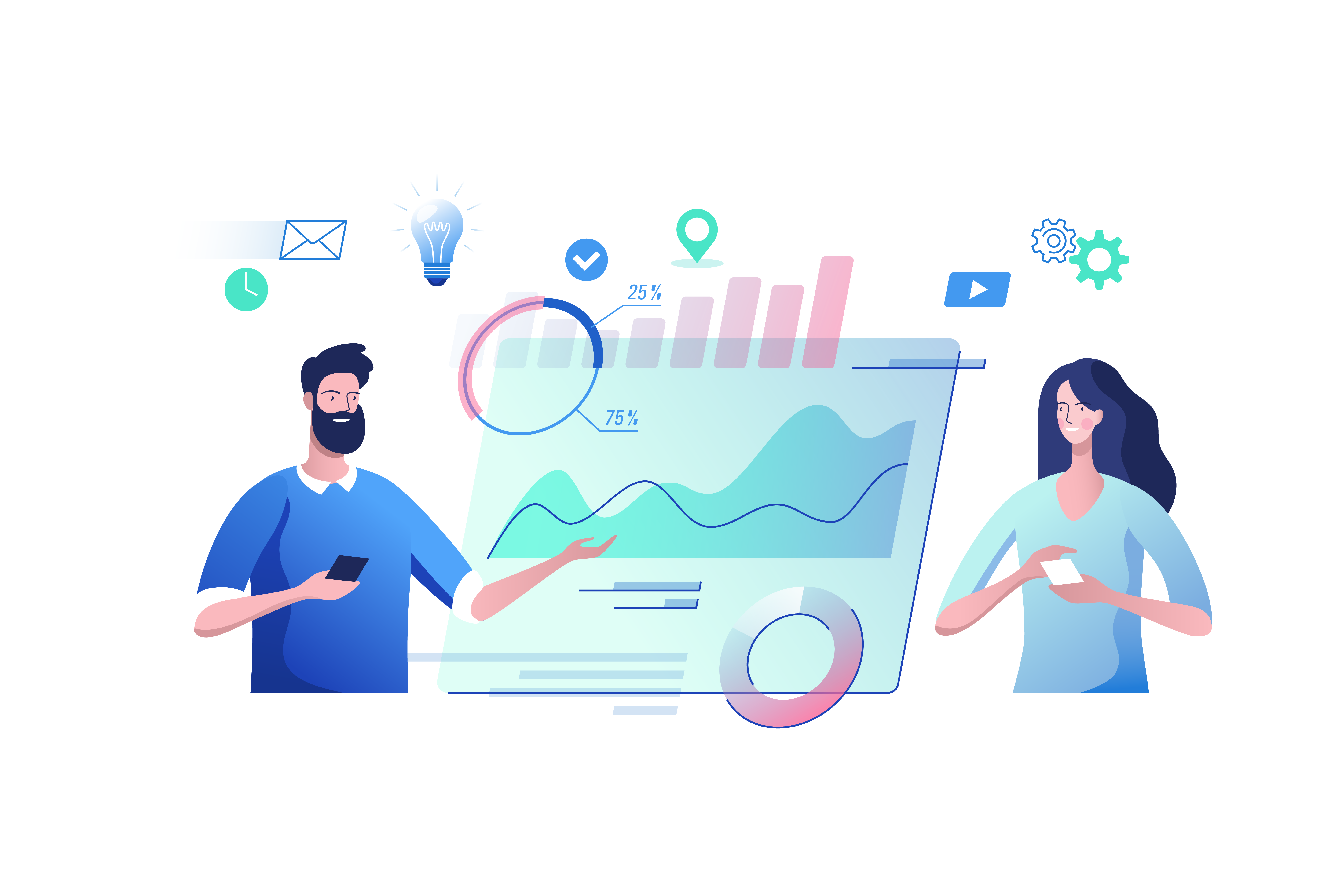
Two characters discuss the benefits of data analytics in light of ISA 315 revisions.

ISA 315 (revised) and Data Analytics: Risk assessment procedures reimagined

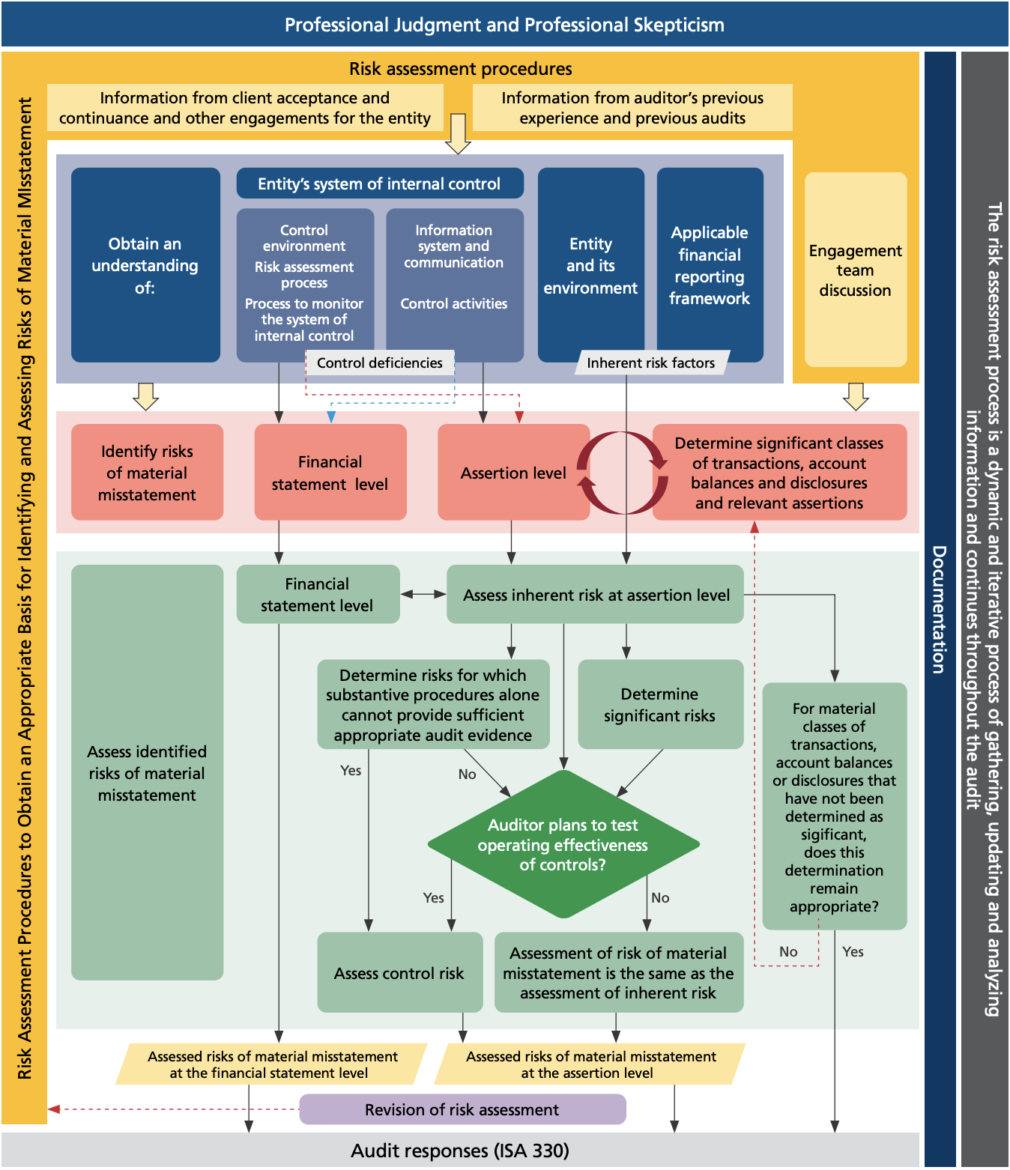
The revised standard has been published as of December 2020, and you might be wondering what impact it has on your firm’s risk assessment procedures and how you can address the requirements. There are many useful sources of information on the changes, notably the IAASB’s Introduction to ISA 315. IFAC also published a helpful flowchart for ISA 315 during the work programme, which walks through the various steps required to assess risk of material misstatement.

There are a number of improvements to the standard, including an enhanced focus on controls (particularly IT controls), stronger requirements on exercising professional scepticism and documentation, and considerations around the use of data analytics for risk assessment. The new standard comes into effect from 15th December 2021, so now is the time to start planning how you will address the changes in your audit. Below we discuss some key considerations on how analytics can support a strong risk assessment.

A chart explaining risk assessment and data analytics as part of the ISA 315 revision by IFAC.

Credit: https://www.ifac.org/system/files/publications/files/IAASB-Introduction-to-ISA-315.pdf

So how can data analytics support your risk assessment according to ISA 315? The areas identified above in red show the different procedures that can be supported by the use of these techniques. A key element of the revised standard is that this should be an iterative process conducted throughout the audit. This means using data analytics tools that can be easily refreshed with the latest information will better support this requirement than more traditional approaches.

Identifying risks of material misstatement at the financial statement level

Data analytics can support the risk assessment procedures laid out in ISA 315 by analysing previous and current accounting data to the financial statement level. This allows the auditor to see the material balances in the accounts, and if machine learning is applied, where the concentration of risky transactions lies. This is where the knowledge gained in the blue boxes above can be brought to bear. Comparing understanding gained through observation to the data is a powerful way to sense check and identify areas for further investigation.

Identifying risks of material misstatement at the assertion level

Specific analyses can target assertion risks and show where there are particular problems with an assertion. To do so effectively, several different analytics tests can be applied and combined to develop a good indicator of an assertion risk, for example accuracy. These can then be applied in an automatic way to give the auditor the information needed for their risk assessment.

Determine significant classes of transactions, account balances or disclosures (COTABD)

Combining assertion analytics with the ability to profile similar transactions can help auditors identify significant classes of transactions or balances. Analytics can help to produce similarity scores, but also to identify sets of transactions that are unusual. This can indicate previously unknown business processes that may require a separate assessment of their control environment.

Assess inherent risk by assessing likelihood and magnitude

Following identification of risk, the audit can guide their assessment by understanding the level of unusualness. Data analytics can provide finer grain evaluations of risk rather than simply risky or not. This can help support assessments aligned with the spectrum of inherent risk as defined in the standard.

Assess control risk

Data analytics such as process mining or automated testing of segregation of duties can help to inform or test control risk. These analytics can provide more comfort around the controls risk assessment and help to identify deviations in the control environment that require further examination.

Material but not significant COTABD

Where COTABD has been determined as material but not significant, recurring analytics can ensure that this assessment remains valid. Anomaly detection methods can be particularly helpful here, allowing the auditor to regularly check that nothing unusual has occurred since the initial assessment was undertaken.

Next Steps: ISA 315 and Data Analytics

Audit methodologies will need to reflect the revised workflow, with particular emphasis on the iterative nature of the risk assessment and ensuring that auditors are prompted to exercise professional scepticism and document it at every stage. Data analytics can help to ensure that the information used to continuously conduct risk assessment is timely, appropriate and relevant.

These improvements to the standard will result in a stronger audit approach and an advancement towards industry adaption data and analytics technologies. With AI audit software, accountants and auditors can gain deeper insights into their client’s financial data, in less time. Overall, the audit software can increase the efficiency of their processes, so they can focus on delivering better results, in time for the ISA 315 (revised) December 15th, 2021 deadline. 

Want to learn more about the benefits of AI auditing software? Read our article on “Assessing audit risk during engagements” to learn more. 

Want to learn more about how auditors are using AI?